


Why Good People Start Working Around Each Other
Nobody plans for this. It rarely starts with ego, politics or obvious dysfunction. It happens in organisations full of decent, capable people trying to do good work in difficult conditions - and slowly, without anyone saying it out loud, collaboration gets heavy and accountability gets blurred. This article explores what's really happening when good people start working around each other and what leaders need to do about it.

The Geopolitical Aftershock: How Global Uncertainty Erodes Your Edge
The risk isn't collapse. It's erosion. When the world won't settle, organisations don't fall apart overnight, they drift. Hiring slows, investment tightens, people hold a little more back. This article explores what geopolitical fragmentation is actually doing inside businesses and why leadership judgement - not speed, tools or slogans - is the stabiliser that matters most right now.

When Growth Feels Unsafe: The Leadership Cost of Permanent Caution
In uncertain economic conditions, caution feels responsible. It feels like good leadership. But there's a point at which caution stops being a tool and becomes the strategy, and that's where the real damage begins. This article explores how the Economic Aftershock is changing how leaders think, what they protect and what they quietly stop believing is possible.
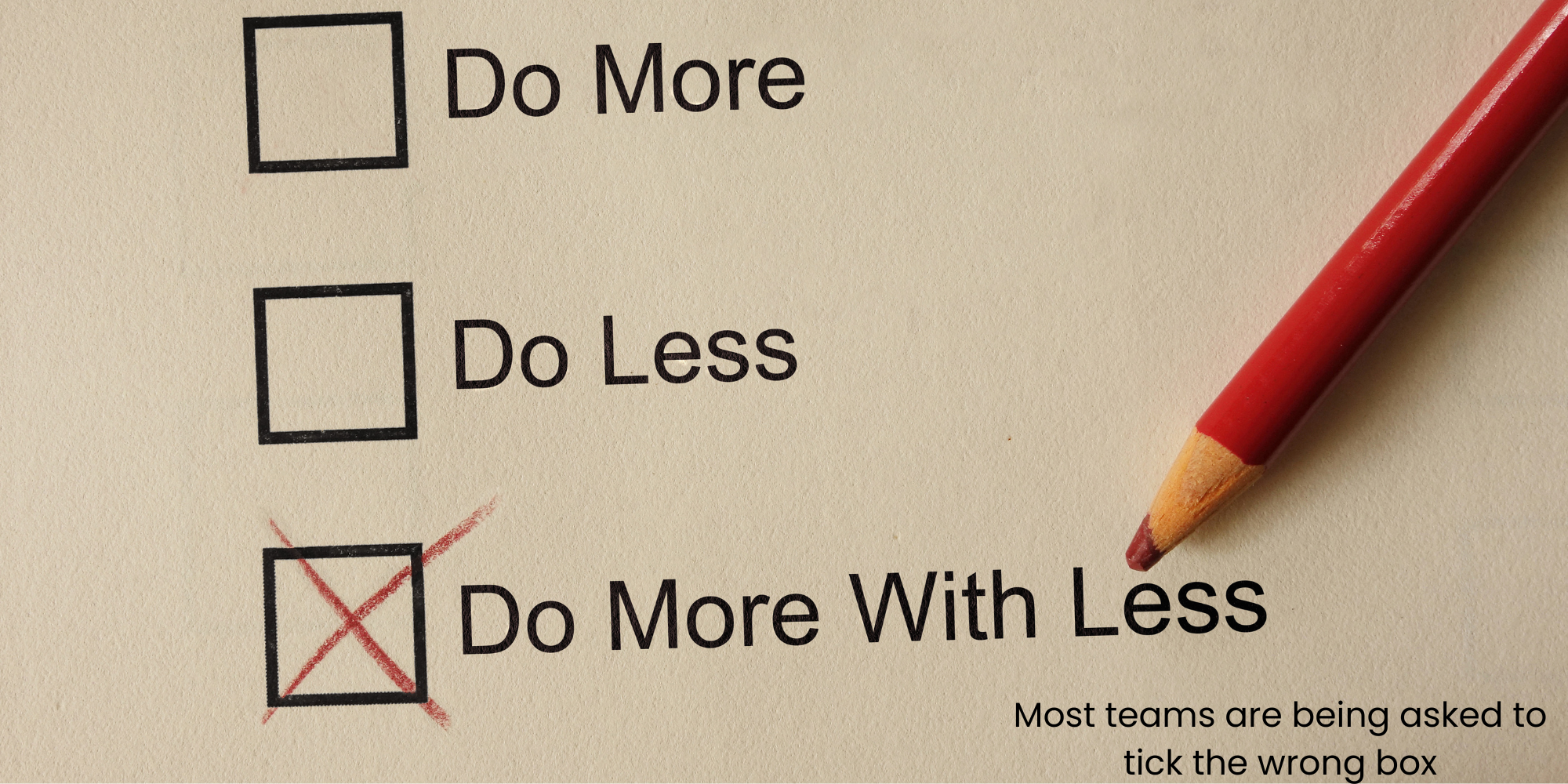
Why "Doing More With Less" Is Breaking Teams, And What Actually Works
When hiring freezes, most organisations respond by pushing harder on efficiency - cutting waste, tightening processes, squeezing more from already stretched teams. It's usually the wrong lever. This article explores why effectiveness matters more than efficiency when capacity is constrained, and how a strengths-based approach unlocks capacity leaders didn't realise they already had.
The Month That Changed Nothing, And What It's Telling You About Your Operating Model
Most leadership teams aren't failing. They're working intensely, exhaustingly - inside an operating model that no longer fits the world they're leading in. Strategy looks clear on paper, effort is high, but progress is strangely absent. This article explores why execution keeps breaking down and what leaders need to do differently.

Soft Burnout: When Pressure Doesn't Break People - It Wears Them Down
Soft burnout doesn't show up in performance data. People are still delivering, still meeting deadlines, still showing up. But the spark is fading, and by the time it becomes visible, the erosion has already been happening for a while. This article explores what soft burnout actually looks like, why high performers are often most at risk and what leaders need to do before the cost becomes irreversible.

The Aftershock Era Has Already Started, And It's Time for Leaders to Reset
We're not in crisis. We're not in recovery. We're in the aftershock era - the quieter phase where accumulated pressure from the past five years begins to surface in leadership teams, organisations and decision-making. This article names what's happening and introduces a framework for resetting before the pressure compounds further.

Why So Few Leaders Actually Use Their Influence - And What Gets in the Way
Most senior leaders have more influence than they realise, and use less of it than they should. Not because they lack capability, but because confidence, boundaries and the fear of vulnerability quietly get in the way. This article explores what actually stops leaders from making the impact they're capable of.

The Middle Manager Problem: Why Your Most Important Layer of Leadership Is Being Set Up to Fail
Middle managers are simultaneously the most important and most overlooked layer of leadership in most organisations. They carry the weight of execution, culture and team performance, often without the development, clarity or support they need to do it well. This article explores what senior leaders need to understand about why that's happening and what to do about it.

Why Brilliant Lawyers Often Struggle to Lead - And What the Legal Profession Needs to Do About It
The legal profession consistently promotes its best technical minds into leadership roles, and then provides little support for what comes next. The result is talented lawyers leading teams, managing people and driving culture without the skills, frameworks or support to do it well. This article explores why that matters and what needs to change.

Are You Still Relevant? What Senior Leaders Need to Know in a Changing World
Most senior leaders don't lose relevance suddenly, it happens gradually, quietly, while they're focused on everything else. This article explores the real questions every leader should be asking about their skills, self-awareness and ability to lead effectively in a world being reshaped by AI and shifting workplace expectations.

The Busyness Trap: Why Being Busy Is Not the Same as Moving Forward
Being busy and moving forward are not the same thing, but for many senior leaders, the difference is hard to see when you're in the middle of it. This article explores why busyness has become a trap for high-performing leaders, and what it actually takes to break free from it.

What Should You Actually Look For When Choosing an Executive Coach?
The executive coaching market is largely unregulated, which means the gap between an exceptional coach and an average one isn't always obvious from the outside. This article cuts through the noise and gives senior leaders and founders a clear, honest framework for making the right choice.

What CliftonStrengths Actually Reveals, And Why Most Leaders Are Surprised by the Answer
Most leaders can tell you what they're good at. Far fewer can tell you precisely where their strengths come from, how those same strengths can become liabilities under pressure, or what's missing in their team because of how it's currently built. CliftonStrengths answers all three questions, and the answers are rarely what people expect.